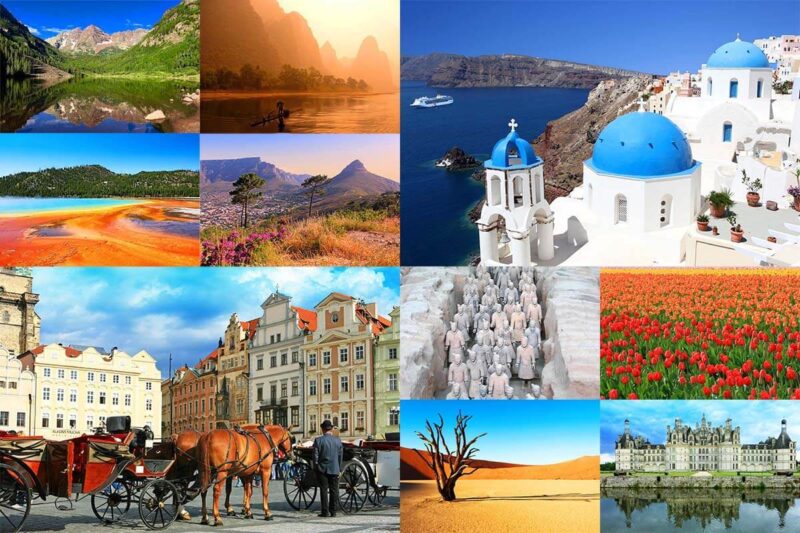
Planning a trip for 2026 feels a bit different compared to a few years ago. People are not just picking famous cities anymore. Many are choosing places that feel more personal, less crowded, or simply easier to enjoy without stress.
I have been rethinking how I choose destinations too. I ask myself simple questions now. Will I actually enjoy being there for a week? Will I spend more time waiting in lines than exploring? Would I go again?
Here are ten places that make sense for 2026, based on real travel trends and personal experience.
1. Delhi, India
Delhi is one of those cities that feels overwhelming at first. I remember stepping out and thinking, can I really navigate this?
But here is the thing. Once you settle into it, Delhi becomes surprisingly manageable and very interesting.
There is history everywhere, but also modern life that moves fast. Food is a major part of the experience, and it is affordable compared to many global cities.
If you are curious about how people experience nightlife or companionship in large cities, you will notice services like Delhi call girls being openly discussed online. It says a lot about how urban culture here is layered and complex.
Delhi works best if you:
- Plan your days loosely
- Stay in a central area
- Accept that not everything will go perfectly
2. Tokyo, Japan
Tokyo is still one of the most efficient cities I have visited. You can move around easily, even if you do not speak the language.
It is also consistently ranked among the top global destinations, which makes sense once you see how organized everything feels.
What surprised me most was how calm certain neighborhoods are, despite the size of the city.
Here is a quick breakdown of what to expect:
| Area | What you get |
| Shinjuku | Busy nightlife, shopping |
| Asakusa | Traditional temples |
| Shibuya | Modern culture and energy |
If you are asking yourself whether Tokyo is worth the long flight, I would say yes, but only if you stay at least five days.
3. Budapest, Hungary
Budapest feels like a practical choice in 2026. Prices are lower than Western Europe, and the city is easier to navigate than you might expect.
More travelers are choosing Eastern Europe for these reasons, especially as costs rise elsewhere.
I liked how balanced the city feels. You can spend a morning at a thermal bath, walk along the river in the afternoon, and still have energy for dinner.
One thing to keep in mind is that winters can be cold, so timing matters more than people think.
4. Bali, Indonesia
Bali is still popular, but how you experience it matters more now.
If you stay in crowded areas, you may feel disappointed. If you choose quieter parts like Uluwatu or Sidemen, the experience changes completely.
Here is what worked for me:
- Staying outside the busiest zones
- Renting a scooter or hiring a driver
- Planning activities early in the day
Travel in 2026 is leaning toward more intentional choices, and Bali rewards that approach.
5. Lisbon, Portugal
Lisbon is easy to enjoy. That is the simplest way to describe it.
The city is walkable, food is good, and prices are still reasonable compared to many European capitals.
One thing I noticed is how many travelers are choosing slightly less crowded cities like Lisbon instead of bigger tourist hubs.
Did you know?
Lisbon has one of the oldest tram systems in Europe, and many routes still operate on original tracks.
That detail alone changes how you move through the city.
6. Cape Town, South Africa
Cape Town feels different from most destinations on this list.
You get a mix of city life and nature, which is harder to find in one place.
I spent one day hiking and another day exploring markets. It did not feel rushed.
Still, it is important to be realistic. Safety can vary depending on the area, so planning matters.
If you are comfortable doing basic research and staying aware, the experience is worth it.
7. Mexico City, Mexico
Mexico City surprised me. I expected it to feel chaotic, but it is actually very structured in many areas.
Food is one of the biggest reasons to visit. It is affordable, varied, and easy to access.
Travel interest in cities like this continues to grow, especially as people look beyond traditional destinations.
I would recommend splitting your time between:
- Historic center
- Roma or Condesa neighborhoods
- Local markets
Each area gives a different perspective on the city.
8. Pune, India
Pune is not always the first city people think of when visiting India, which is exactly why it works.
It feels more relaxed than larger cities, and daily life is easier to navigate.
You still get culture, food, and local experiences, but without constant pressure from crowds.
In larger urban areas, you will notice services such as Pune call girls being part of the broader city economy. It reflects how diverse and layered modern Indian cities have become.
If you are deciding between Mumbai and Pune, I would say Pune is the better choice for a calmer visit.
9. Reykjavik, Iceland
Reykjavik is not cheap, so that is the first thing to be clear about.
But if you are interested in nature, it offers something very specific that is hard to find elsewhere.
In 2026, more travelers are choosing destinations connected to natural experiences and slower travel.
Here is what makes it stand out:
- Access to waterfalls and glaciers
- Northern lights during certain months
- Clean and organized infrastructure
You need to plan your budget carefully, but the experience is straightforward.
10. Seoul, South Korea
Seoul is one of the most balanced cities I have visited.
You get modern technology, strong public transport, and a food scene that is easy to explore even as a visitor.
I also noticed how many people return to Seoul after their first trip. That usually says something important.
If you are unsure whether to include it in your 2026 plans, ask yourself one thing. Do you enjoy cities where everything works smoothly?
If yes, Seoul is a strong option.
Why travel in 2026 feels different
Before getting into the list, it helps to understand what is changing. Travel is not slowing down, but the way people choose destinations is shifting.
Travelers are moving toward places that offer:
- More space and fewer crowds
- Local experiences instead of generic tours
- Better value for money
- Flexible travel options
Many are also choosing destinations that feel more intentional rather than copying popular itineraries.
That mindset shaped this list.
Final thoughts
If you are building your 2026 travel list, try not to follow what everyone else is doing.
Ask simple questions instead. Where will you feel comfortable? Where can you actually enjoy your time without rushing?
Travel trends are pointing toward more personal choices, not just popular ones.
I have made the mistake of choosing destinations just because they were trending. It rarely worked out well.
The places on this list make sense because they offer a balance. They are interesting, but still manageable. That balance is what matters most when your time is limited.