
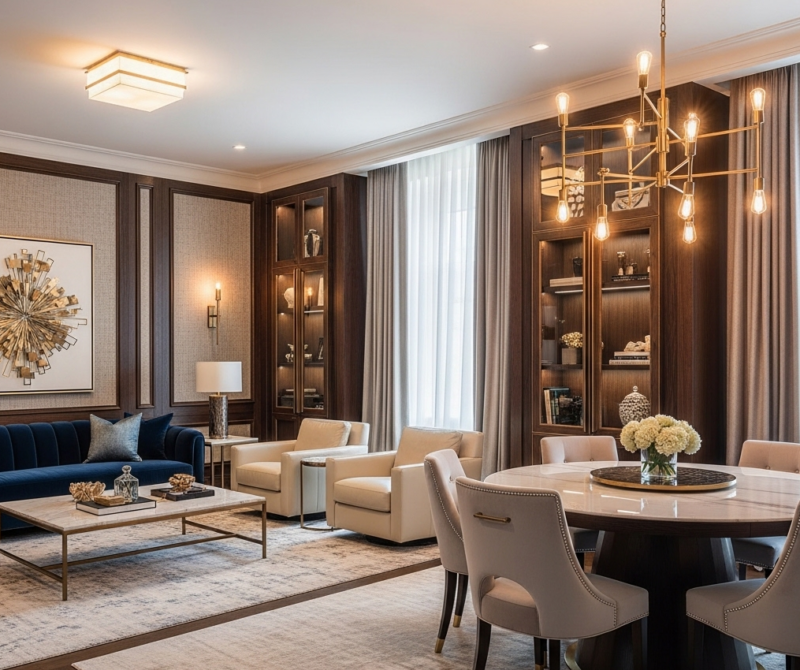
A well-composed interior does not come from adding more elements. It comes from understanding how each surface, material, and proportion relates to the next. When finishes are treated as a connected system, the space begins to feel complete without needing decoration to compensate.
This approach is especially relevant in luxury interiors. The focus is not on statement pieces, but on continuity. Walls, floors, doors, textiles, and lighting must speak the same language. When they do, the result feels calm, intentional, and durable over time.
Start With Continuity, Not Decoration
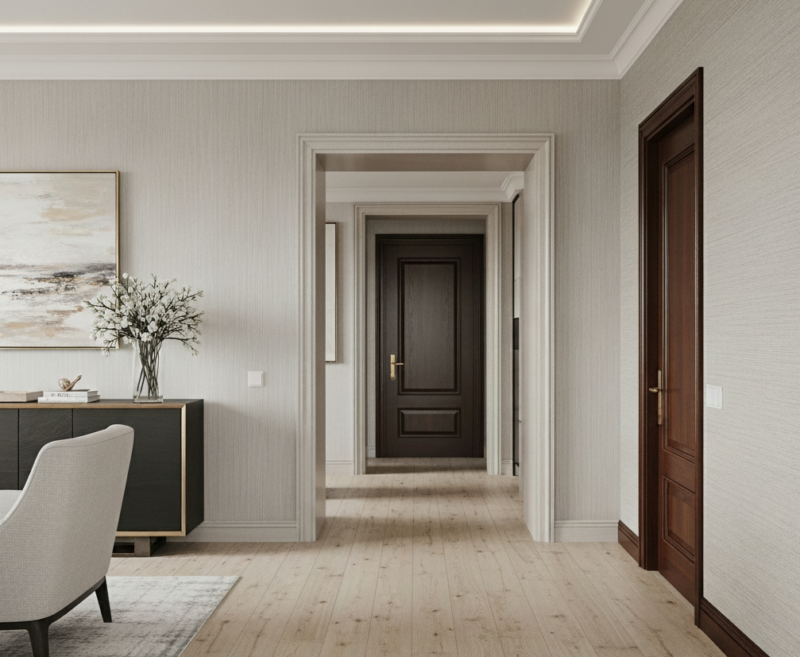
Before selecting any material, it helps to think about how the space will be experienced from one room to another. Cohesion is not about making everything identical. It is about creating a consistent relationship between elements.
In a well-resolved luxury interior, finishes are chosen for how they connect. Flooring lines align across thresholds. Wall textures shift gently, not abruptly. Even architectural details like doors contribute to this continuity. If you look at a refined example of a luxury interior, you will notice that transitions are almost invisible.
This is where many projects fail. Finishes are selected individually rather than as part of a whole. The result feels fragmented, even if each element is expensive.
Cohesion in interior design means all elements support a unified idea through consistent materials, color, and proportion.
Build a Material Palette That Works as One System
A cohesive interior begins with a limited palette. Not minimal, but controlled. Each material should have a clear role and relate to the others in tone and texture.
Instead of collecting finishes, define a core group:
- One primary structural material such as wood or stone
- One complementary surface such as plaster or limewash
- One accent material like metal or glass
The key is interaction. A matte wall finish will absorb light differently than polished stone. These contrasts should feel intentional, not accidental. Designers often emphasize how finishes react to light because it shapes how a space is perceived throughout the day.
Material Interaction Example
| Element | Finish Type | Role in Space |
| Flooring | Natural wood | Warm base layer |
| Walls | Lime plaster | Soft visual backdrop |
| Joinery | Brushed oak | Continuity |
| Fixtures | Aged brass | Subtle contrast |
This kind of structure prevents visual noise. Each material supports the others rather than competing.
Use Texture to Create Depth Without Adding Objects
Luxury interiors often feel layered, but not crowded. That comes from texture, not quantity.
A smooth stone surface next to a soft fabric creates contrast. A matte wall beside a lightly reflective metal adds variation. These differences give depth without requiring more furniture or decoration.
Recent design guidance reinforces that layering materials like wood, stone, and textiles is essential to avoid flat interiors.
What to focus on
- Combine hard and soft surfaces
- Balance matte and subtle sheen
- Keep textures within the same tonal range
This approach keeps the room calm while still visually engaging. If everything has the same texture, the space feels flat. If textures are too varied, it feels unsettled. The balance sits somewhere in between.
Control the Color Palette With Discipline
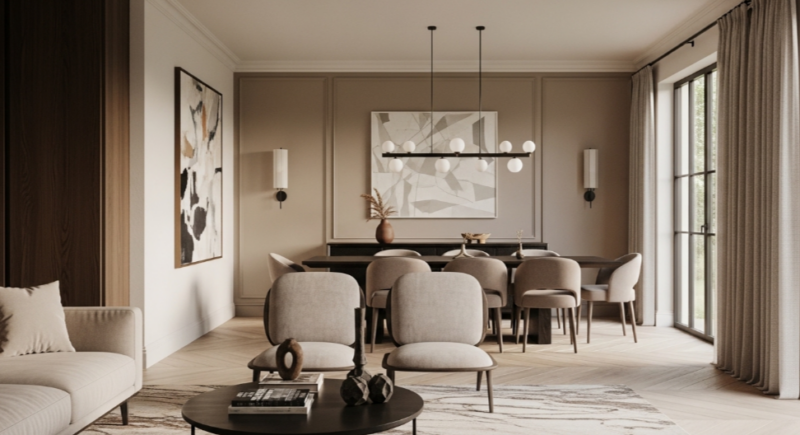
Color is one of the easiest ways to lose cohesion. A restrained palette helps materials connect naturally.
Most cohesive interiors rely on a base of neutral tones, then introduce variation through texture rather than strong color contrast.
Instead of adding new colors in each room, repeat tones in different forms:
- A warm beige wall can reappear in textiles
- A dark wood tone can repeat in furniture and trim
- Stone veining can echo subtle accent shades
Did you know
A limited palette does not reduce visual interest. It increases it by allowing texture and material quality to become more visible.
Strong color changes between rooms tend to break continuity. Subtle shifts maintain flow while still allowing each space to feel distinct.
Pay Attention to Proportion and Scale
Even with the right materials, a space can feel off if proportions are not considered. Cohesion depends on balance as much as on finishes.
Furniture, architectural details, and surface areas must relate to each other. Large surfaces should not be interrupted by overly small elements. Likewise, fine details should not be lost in oversized spaces.
Design principles consistently point to balance and spatial flow as foundational to luxury interiors.
Common adjustments that improve cohesion
- Use full-height doors to align vertical lines
- Extend flooring consistently between rooms
- Keep trim and detailing proportional to wall height
These decisions are subtle, but they shape how the space is perceived as a whole.
Edit Relentlessly and Remove What Does Not Belong
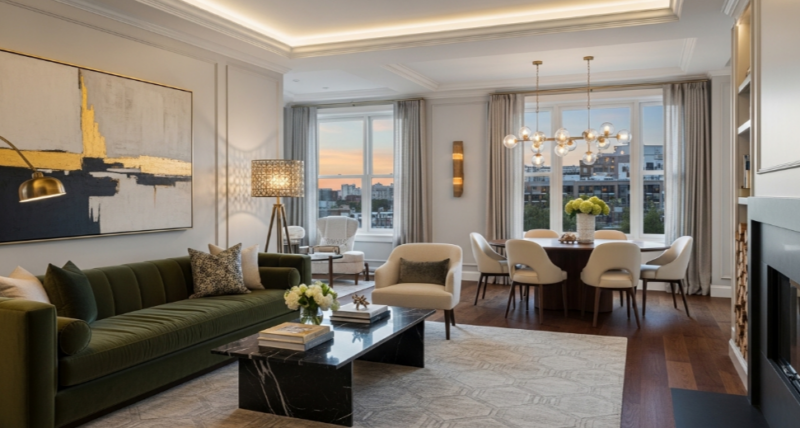
Cohesion is often achieved through removal, not addition. When too many materials or finishes are introduced, the space loses clarity.
A practical way to evaluate a room is to step back and identify repetition. If a material appears only once, it may not belong. Repetition creates connection.
Interior experts often recommend finding common threads across elements to unify a space.
A simple editing method
- Identify the three dominant materials in the room
- Remove or replace anything outside that group
- Reintroduce variation through texture, not new materials
This keeps the design focused. It also makes the space feel intentional rather than assembled.
Use Lighting to Reveal the Finishes
Lighting is not separate from finishes. It defines how materials are experienced.
Natural light will highlight texture and variation. Artificial lighting should support this, not flatten it. A layered lighting approach allows different surfaces to be seen properly at different times of day.
Design frameworks consistently emphasize lighting as a key factor in elevating material quality and spatial depth.
Practical approach
- Use indirect lighting to soften wall textures
- Add focused lighting to highlight stone or wood grain
- Avoid overly harsh overhead lighting
Good lighting does not draw attention to itself. It allows the finishes to be understood clearly.
Conclusion
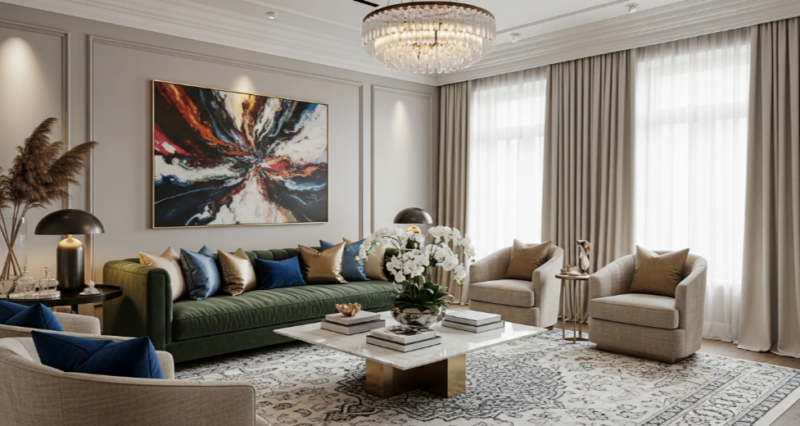
Creating a cohesive luxury interior with custom finishes is less about selecting premium materials and more about how they relate to each other. When finishes are considered as a system, the space begins to feel stable and resolved.
Start with continuity. Limit the palette. Pay attention to texture, proportion, and light. Then remove anything that interrupts the flow.
If each decision supports the next, the result will not need explanation. It will simply feel complete.