
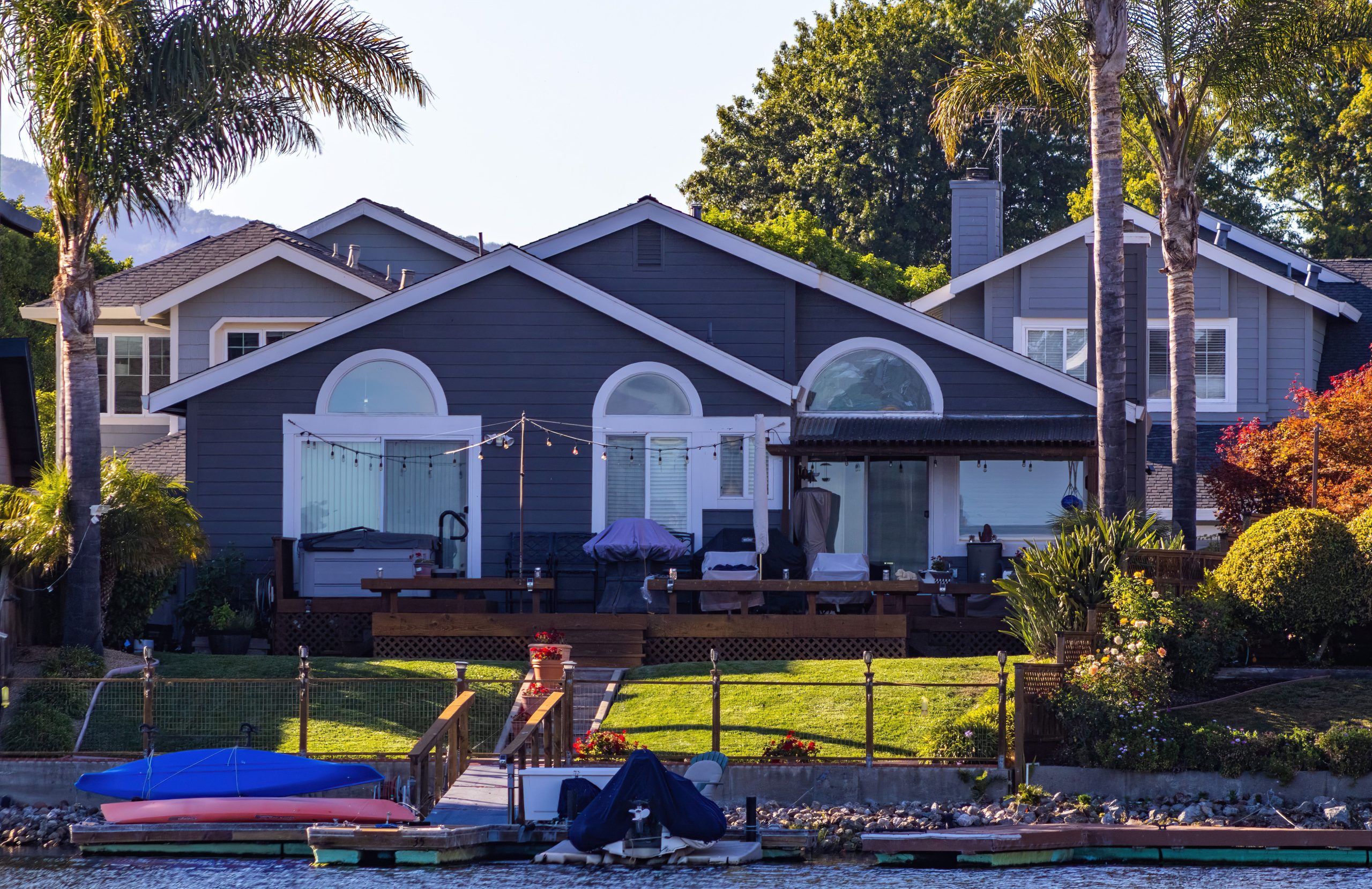
A coastal backyard has to do more than look relaxed. It has to cope with salt spray, intense sun, wind-driven rain, humid air, sandy or compacted soil, and materials that stay damp longer than expected. The most successful designs treat those conditions as the starting point rather than adding tropical-looking furniture to an ordinary yard.
This guide focuses on practical coastal backyard design ideas for homes exposed to moisture and heat. The goal is a yard that remains comfortable and attractive while reducing premature fading, corrosion, plant stress, standing water, and avoidable maintenance.
Start with the exposure, not the furniture
Before choosing pavers, plants, or an outdoor kitchen, map the backyard’s microclimates. A wall facing the afternoon sun may be hot and dry, while the area under a roof stays cooler but holds moisture. A side yard facing the water may receive direct salt spray, whereas a sheltered corner may support a wider range of plants.
Walk the site at different times of day and note:
- Where direct sun reaches the ground in the morning and late afternoon.
- Where water collects after heavy rain or irrigation.
- Which walls, fences, and fixtures receive salt-laden wind.
- Where air moves freely and where dense planting traps dampness.
- Which paths and seating areas become uncomfortable from reflected heat.
This assessment matters because salt and moisture do not damage every part of a property equally. A NOAA coastal hazards report identifies salt spray corrosion and moisture-related decay as commonly overlooked coastal risks, and recommends corrosion-resistant components with regular inspection. That is a strong argument for designing access to fasteners, drains, posts, and outdoor equipment into the plan from the beginning.
Build shade that also manages rain
A pergola, shade sail, covered terrace, or broad roof overhang can turn a heat-exposed yard into a usable outdoor room. But shade alone is not enough. A structure that blocks sun while trapping humid air or directing runoff toward the foundation creates a different problem.
Use a layered approach:
- Place the main seating area under adjustable or filtered shade rather than deep permanent shade everywhere.
- Keep the structure open on at least two sides where breezes are valuable.
- Give roofed areas a deliberate slope, gutter, or discharge point so water does not fall beside doors and foundations.
- Use vines cautiously; keep them away from gutters, roof coverings, timber joints, and mechanical equipment.
- Choose furniture that can dry quickly and can be secured before a severe storm.
The U.S. Department of Energy’s hot-humid building guidance lists overhangs as a way to provide shade and direct water away from the house. The same principle works outdoors: shade should reduce radiant heat while moving rain to a place where the soil or drainage system can accept it.
Choose materials for salt, heat, and drying time
In a coastal yard, the question is not simply whether a material is marketed as outdoor-rated. Ask how it behaves after years of wet-dry cycles, salt exposure, ultraviolet light, and windborne grit. Also ask whether the material can be cleaned, repaired, or replaced without dismantling the entire space.
| Element | Main exposure | Design response | Inspection focus |
|---|---|---|---|
| Decking or raised walkways | Rain, sun, dampness beneath boards | Provide airflow and drainage; avoid details that hold wet debris against the structure | Soft spots, trapped leaves, open joints, and fastener corrosion |
| Metal hardware | Salt spray and persistent humidity | Specify corrosion-resistant fasteners and connectors appropriate to the exposure | Rust, flaking coatings, loose connections, and staining below fittings |
| Patio surface | Heat, runoff, algae, sand | Use a textured, light-to-mid-tone surface with a fall toward drainage | Slippery film, settled areas, cracks, and blocked outlets |
| Fence or privacy screen | Wind, salt, splashback | Use a ventilated design rather than a fully solid wind wall where appropriate | Loose posts, rot at ground level, and trapped vegetation |
| Outdoor cabinetry | UV light, rain, condensation | Keep it under cover and provide ventilation so damp air can escape | Swollen edges, failed seals, mold, and corroded hinges |
Source note: The corrosion and moisture priorities reflect NOAA coastal construction guidance; the shade and rain-management approach reflects U.S. Department of Energy hot-humid design guidance. Both sources were accessed for this article in October 2026.
Wood can work well in a coastal setting when it is correctly selected, detailed, and maintained, but it should not be treated as maintenance-free. The same is true of composite products: resistance to rot does not make every fastener, substructure, cut edge, or connection immune to salt and water.
For walls, screens, and garden structures, compare the complete assembly rather than one finish. That includes the frame, fixings, ventilation behind the surface, flashing, and the cladding if the structure adjoins the house. My design bias is to favor assemblies that can dry from more than one direction; a beautiful surface that traps water behind it is a poor coastal detail.
Use planting to cool and protect the yard
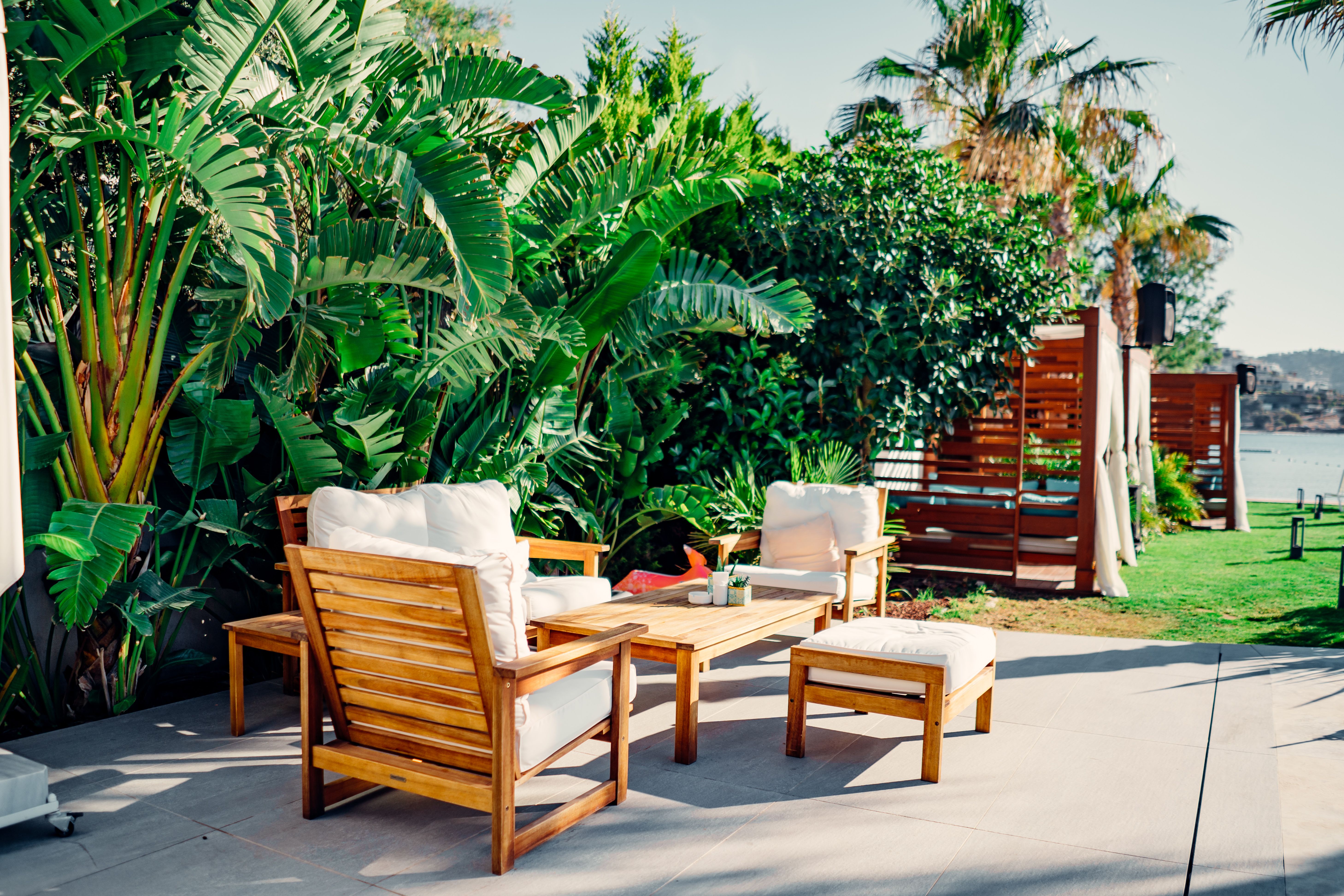
Plants are the soft infrastructure of a coastal backyard. Trees and layered shrubs can reduce glare, cool seating areas, filter wind, and make a hard patio feel integrated with the landscape. They can also create a damp, inaccessible strip against the house if they are placed without regard to airflow and maintenance.
Choose plants by microclimate, not by a generic “beach house” list. The University of Georgia Extension notes that coastal plant selection should account for salt spray, soil salinity, heat tolerance, drainage, and spacing. It also identifies native plants as useful choices because they are adapted to local climate and ecological pressures.
Useful planting strategies include:
- Put salt-sensitive plants behind a first layer of tougher shrubs or fencing, rather than in the most exposed position.
- Use canopy trees to shade the west side of seating areas, but keep mature root systems and branches away from roofs, utilities, and paving.
- Group plants with similar water needs so irrigation does not keep one area perpetually wet.
- Leave a service gap beside walls, condensers, gates, and drainage points.
- Use natural mulch or ground cover to reduce evaporation and erosion, while keeping mulch away from trunks and siding.
Palms can provide the visual language many coastal homeowners want, but a yard made entirely of palms tends to offer less shade and less habitat than a mixed canopy. Include salt-tolerant grasses, shrubs, ground covers, and at least one species suited to the local ecosystem. The result usually looks more settled and requires less heroic watering once plants establish.
Design drainage before adding decoration
Coastal moisture is not just rain from above. It can include irrigation overspray, splashback from paving, condensation from outdoor equipment, rising damp in low areas, and water carried by wind. Solve those flows before installing an outdoor kitchen, fire feature, or expensive furniture.
Good starting points are:
- Grade hard surfaces away from the house and toward planted beds, swales, drains, or approved collection points.
- Keep downspouts from discharging directly beside foundations or onto paths.
- Use permeable or jointed paving where site conditions allow infiltration and the base can be built correctly.
- Separate pool splash zones from planting beds that cannot tolerate frequent chlorinated or salty water.
- Inspect irrigation heads for overspray onto walls, fences, windows, and seating.
The Department of Energy’s landscaping guidance recommends considering the local microclimate and avoiding frequently watered planting beds right beside the house in hot-humid regions. That small adjustment can reduce both moisture exposure and the amount of maintenance hidden behind shrubs.
Four layouts that work in difficult coastal yards
1. The shaded dining court
Place a dining table under a ventilated pergola or roof extension, with a hard-wearing surface and a planted edge on the windward side. Keep the kitchen or serving point close enough to use but not directly beneath the path of roof runoff. This layout works particularly well when the yard has a strong ocean view that should remain open.
2. The pool-and-cooling garden
Use the pool as the focal point, then put shade on the seating side rather than trying to shade every square foot of water. Select plants that tolerate reflected heat and occasional splash, and use non-slip paving with a clear route to drainage. Keep dense foliage away from pumps, filters, and inspection panels.
3. The protected tropical courtyard
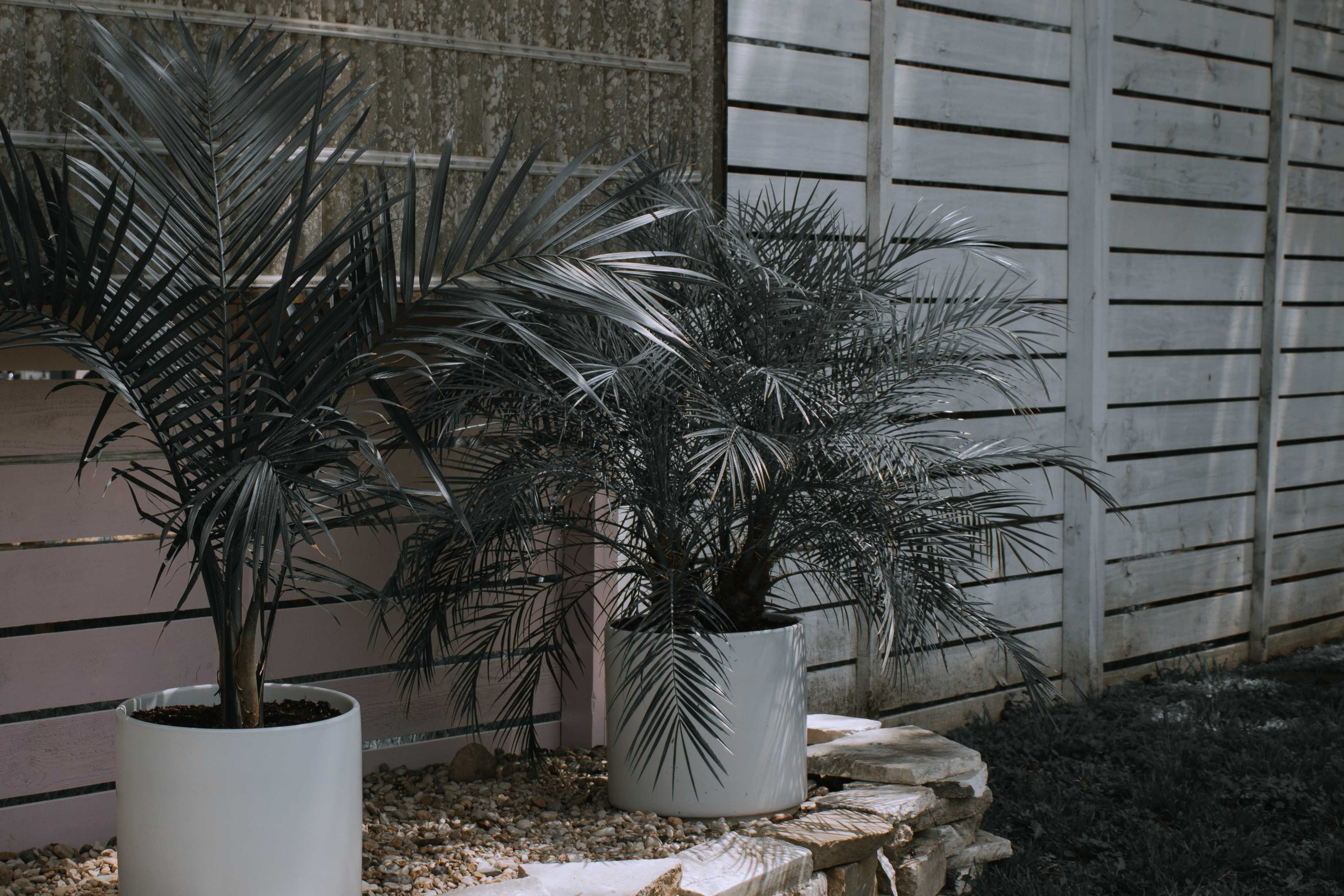
For a small yard, place taller screening plants or a slatted fence on the harshest exposure, then arrange lower planting and seating inside the protected pocket. A ventilated screen is preferable to a solid barrier when wind pressure and airflow are concerns. Use containers only where you can lift, secure, and replant them; large numbers of pots create more irrigation and cleaning work than most owners expect.
4. The low-maintenance coastal buffer
Leave a planted zone between the house and the more active recreation area. Combine native ground cover, salt-tolerant shrubs, and mulch with a simple path for inspection. This is less manicured than a resort-style lawn, but it can handle exposure more honestly and gives rainwater somewhere to slow down.
A maintenance rhythm that prevents small failures
Coastal maintenance is most effective when it is brief and regular. The expensive failures are often visible earlier as a loose fastener, blocked drain, peeling coating, or plant growing into a gutter.
Use this simple rhythm:
- After major storms: remove windblown debris, check drains, look for loose screens and furniture, and rinse exposed metal where appropriate.
- Monthly during the wet or hot season: inspect irrigation overspray, standing water, algae on walking surfaces, and vegetation touching walls or equipment.
- Seasonally: clean gutters and drainage channels, check deck and fence connections, prune for airflow, and examine sealants and exposed finishes.
- Annually: review whether plants have outgrown their microclimate, whether shade still falls where people sit, and whether any coastal hardware should be replaced before it fails.
Do not wait for obvious rust or rot before checking exposed connections. NOAA’s coastal building observations found that corrosion can compromise partially exposed metal components, particularly where they receive salt-laden air without enough cleansing rainfall. A quick inspection is cheaper than discovering the problem after a storm.
What I would prioritize first
If the budget is limited, I would not begin with decorative planting or a large outdoor kitchen. I would put the first money into shade, positive drainage, sound substructure, and corrosion-resistant connections. Those decisions affect comfort and durability every day; cushions and accessories can be added later.
The best coastal backyard is not the one that looks untouched by weather. It is the one that expects weather, gives water somewhere to go, lets materials dry, and places each plant where it has a realistic chance to thrive. Design those four conditions well and the relaxed coastal look follows without requiring constant replacement.