There is one sentence that every business owner in the cannabis space needs to hear before they sign a packaging contract: the moment your flower, edibles, or pre-rolls leave the facility, the package stops being just branding. It becomes the document a state inspector will read first. And unlike almost every other purchase you make, the compliance liability for that package sits with your license, not with the company that printed the box.
The market has never been more crowded. Grand View Research estimated the U.S. cannabis packaging market at roughly $1.36 billion in 2023 and projects it approaching $8 billion by 2030, growth that keeps pulling new vendors in. That is good news for choice and bad news for due diligence, because a crowded category is where the shortcuts hide.
In my view, most brands pick a manufacturer backwards. They start with the look, work backward to compliance, and treat price as the deciding variable. The manufacturers that actually protect you demand the opposite order of operations. Here is the checklist I would run, in the order I would run it.
The compliance test comes before the design brief
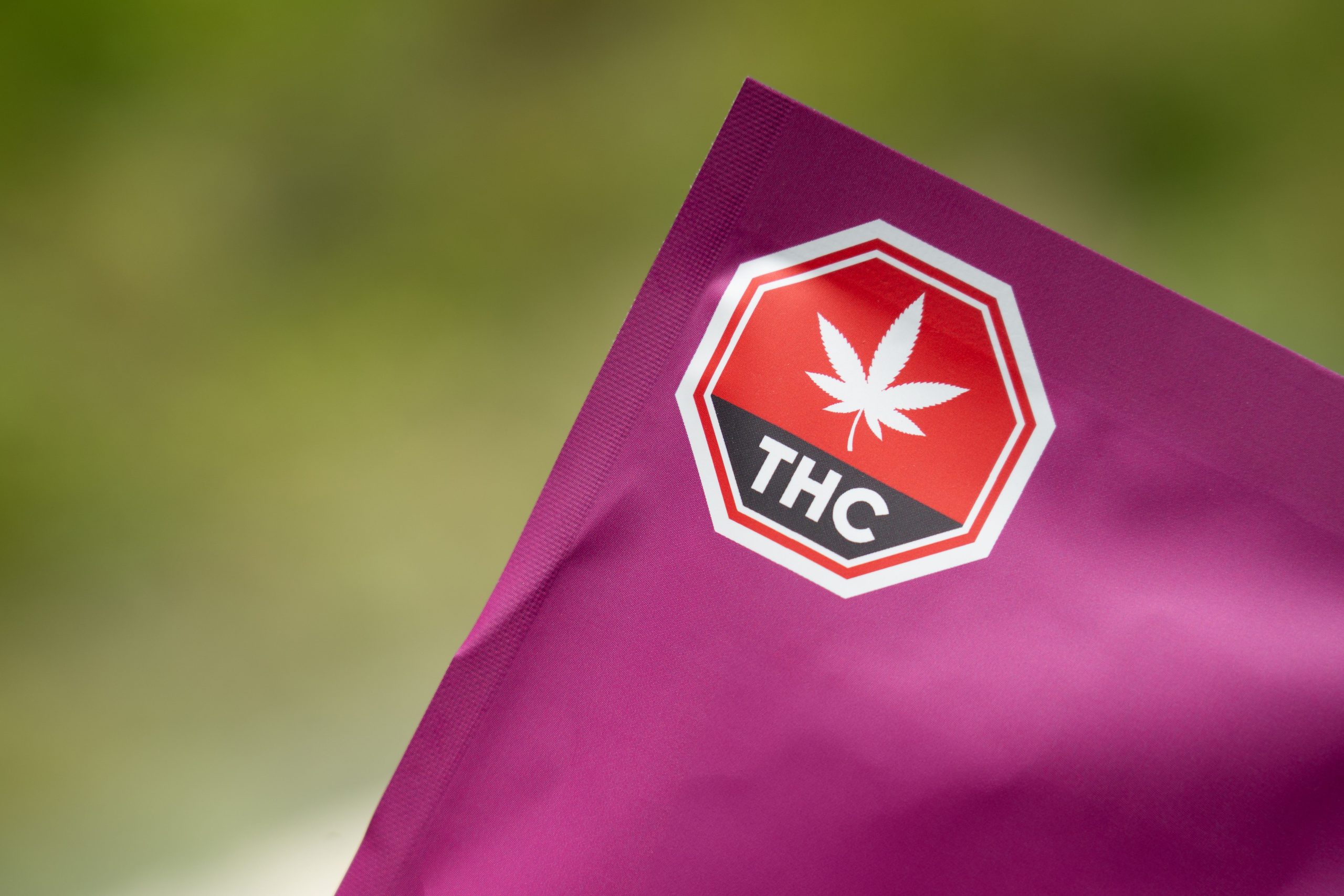
Under the federal Poison Prevention Packaging Act framework, child-resistant packaging is held to specific, testable performance bars: child-resistant effectiveness of at least 85% before a demonstration of how to open it, at least 80% after a demonstration, and senior-adult use effectiveness of at least 90% for the senior panel, per 16 CFR 1700.15(b). States layer their own rules on top, most requiring opaque containers, tamper-evident features, a universal THC symbol, and state-specific warning language.
The testing itself is not a quick check. The protocol in 16 CFR 1700.15 and 1700.20 runs panels of children aged 42 to 51 months, in sequential groups that can climb to 200 children over a ten-minute window, alongside senior-adult panels aged 50 to 70. That is why “child-resistant” is a specific, documented claim, not a marketing adjective.
| Requirement under 16 CFR 1700.15(b) | Performance bar | Why it matters to you |
|---|---|---|
| Child-resistant effectiveness, no demonstration | At least 85% | Children can’t open the package on their own |
| Child-resistant effectiveness, after demonstration | At least 80% | Resists even once shown how to open it |
| Senior-adult use effectiveness (SAUE) | At least 90% | Legitimate customers aged 50–70 can still open it |
Federal figures per 16 CFR 1700.15(b), retrieved from Cornell’s e-CFR on September 2026. State cannabis rules often impose the same or stricter bars.
Here is the point most articles skip: a certification covers the exact package. A test report for a “similar” jar with a different lid size is a report for a package you are not buying. If you change the closure mechanism, the material, or even the dimensions, the existing certificate may not transfer. Retesting is not cheap, and it is never retroactive, so ask precisely which SKU each document covers before you commit to it.
The industry changes faster than your supplier’s marketing page
Compliance is not static, and neither should your supplier be. Cannabis Industry Journal’s April 2026 guide to evaluating suppliers documents how the Texas Department of State Health Services rolled out sweeping new packaging rules for consumable hemp products on March 31, 2026, giving businesses roughly 20 days of notice. Under those rules, multi-serve consumable hemp products must be tamper-evident, child-resistant, and resealable in a way that keeps the child-resistant mechanism intact after first opening, a requirement that eliminates closures which pass at the point of sale but fail once resealed.
A supplier who tracks these shifts proactively, and flags them to you before you order the wrong thing, is worth real money. Julie Kuepers, writing for Cannabis Industry Journal, puts it better than I can: “Cannabis packaging is no longer a purchasing decision. It’s a strategic one.” The vendor who has to be told about a rule change is a vendor who will cost you a recall eventually.
The unit price is the last number you should compare
Here is where I will push back on conventional buying wisdom. The lowest per-unit quote is almost never the cheapest packaging you will ever buy, because the risk moves onto your balance sheet the moment you sign. If a package fails a state inspection, the fine, the destroyed batch, and the lost shelf placement are all yours. A manufacturer who is vague about certification documentation is effectively selling you that risk at a discount.
Beyond risk, the real costs hide in the operational details: minimum order quantities, lead times, freight terms, and tooling. Supplier-published numbers vary enormously, and comparing them is an education in itself. One manufacturer’s published guide puts stock programs around 1,000 to 5,000 units, custom programs starting at 500 to 5,000, and custom production runs at two to four weeks after artwork approval, with freight adding anywhere from five days to four weeks depending on whether you ship by air or sea.
So a credible end-to-end timeline for a first custom order is three to eight weeks. Anyone quoting materially less is likely quoting only the production step. Suspicion should run in both directions: an MOQ of 50,000 units on a first order forces you to warehouse a year of packaging for an unproven SKU, and a “no minimum” custom program usually means you are talking to a broker reselling someone else’s stock.
Manufacturer, broker, or middleman
That last point deserves its own section, because the distinction between a manufacturer and a broker shapes everything downstream. A direct manufacturer controls tooling, production, quality control, and decoration, and can adjust a dimension by two millimeters or produce a certification document in days. A broker, however good their catalog, is relaying your question to someone else’s factory and cannot modify what they do not control.
There is a real case for buying through intermediaries, and it is worth steel-manning: brokers often hold stock domestically, offer broad catalogs, and can ship quickly. If you need a certified stock format tomorrow and the factory is overseas, a broker with U.S.-held inventory is a legitimate answer. The problem is when a broker is the only answer you ever get, because then documentation traceability and problem resolution live with a party that cannot act.
I would not rule out overseas manufacturing either. Plenty of certified, high-quality packages are made abroad. What matters is that somebody you can hold accountable verifies the factory’s output, holds the paperwork, and stands behind the lot. That is exactly what a full-service custom packaging company like cannacustomsupply does by design, which is why the direct-manufacturer model keeps winning in regulated markets: one accountable source for design, print, tooling, and the documentation your inspector will ask for.
Samples are the real contract
Spec sheets are promises; samples are evidence. Before any order, run the physical package through your actual operation: receive it, fill it, close it, label it, case-pack it, and ship it through the same temperature swings your product endures. A closure that feels solid on a showroom table can behave differently after a 48-hour freight trip. Then open it the way a customer would, repeatedly, because resealable formats have to keep performing across multiple open-and-close cycles.
Ask how the packaging arrives, too. A pallet of loose jars in bulk cartons costs you a shift of labor before the first unit is filled; production-ready case packs that arrive oriented and counted can save a full day on a 10,000-unit run. If the sample behaves differently from what shows up on the production order, the supplier’s quality control is not good enough, and no price justifies that gap.
The sustainability premium is a real line item
Sustainability is no longer a nice-to-have in this category. Industry surveys cited in supplier guidance consistently show 50 to 70% of cannabis consumers weigh packaging sustainability in brand selection, strongest among under-35 buyers. But sustainable packaging costs more, and the premiums differ wildly by material.
| Material choice | Typical premium over conventional | Main catch |
|---|---|---|
| PCR HDPE (rigid containers) | 5–15% | Color and mechanical consistency at higher PCR ratios |
| Mono-material PE pouches | 10–20% | Lower barrier than multilayer mylar |
| FSC-certified paperboard | 3–8% | Limited shelf-life protection on its own |
| Hemp-based bioplastics | 30–60% | Thin commercial supply, real cost |
Premiums as published in Finished Goods’ sustainable packaging guide, June 2026. Treat as planning ranges, not quotes.
Watch the compliance angle too. New York already requires a minimum 25% post-consumer recycled content in plastic cannabis packaging under its marijuana regulation law, and other states are moving toward extended producer responsibility schemes. But be allergic to vague claims: “eco-friendly” with no certification is marketing, while a specific BPI certification number or a stated PCR percentage is something you can verify. Ask your manufacturer which materials carry which certificates before you pay a green premium for a story.
Labels carry the brand where compliance leaves room
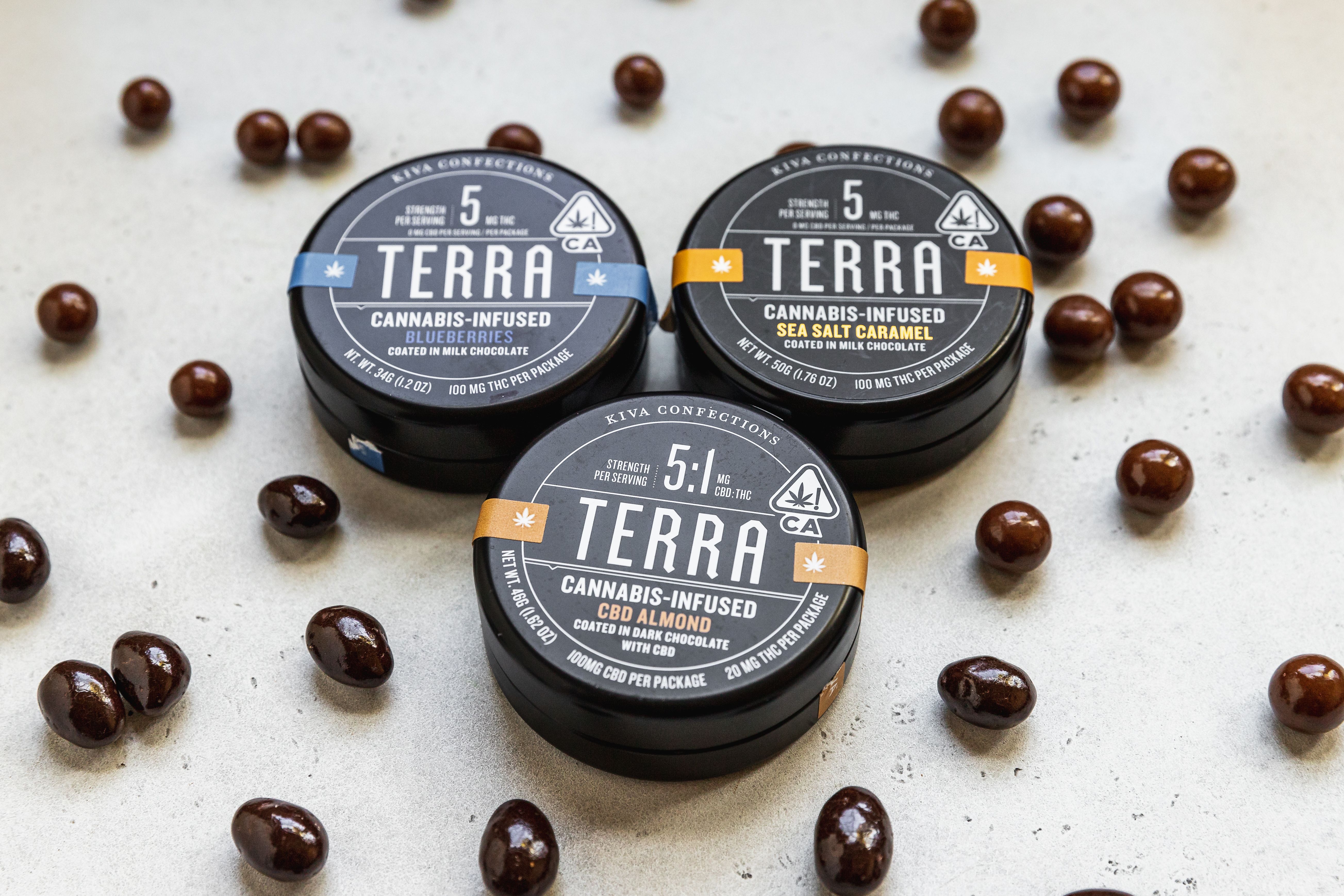
None of this means the packaging has to look like a compliance form. Regulation claims a big share of your label real estate, so the design work is about using the remaining surface with intent. Own one color and repeat it across every SKU, because customers scan dispensary shelves by color before they read a name. Spend on finish rather than print area, since a tactile difference is what makes a package get picked up. And standardize your layout so the compliance information always lives in the same place and the brand always owns the front.
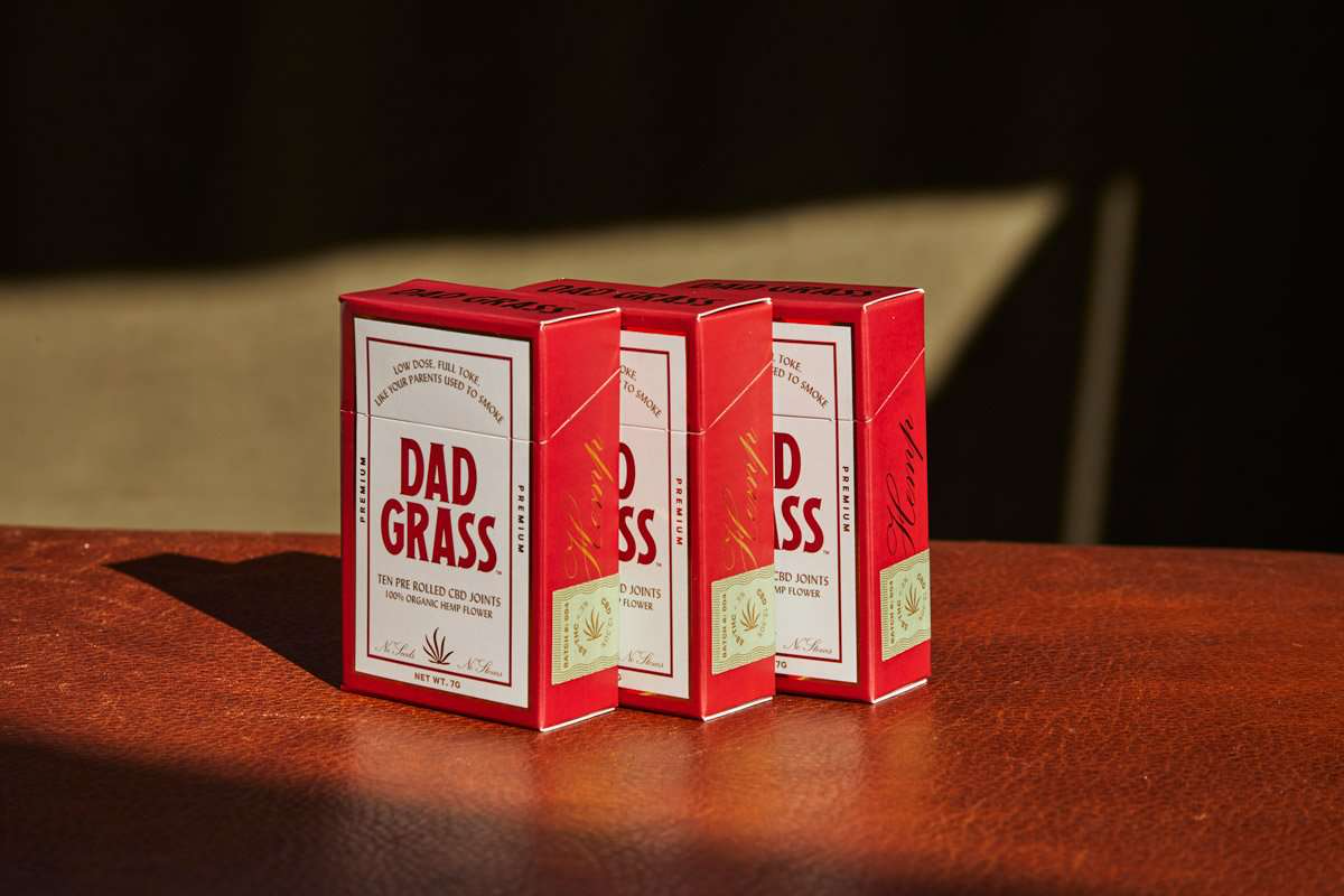
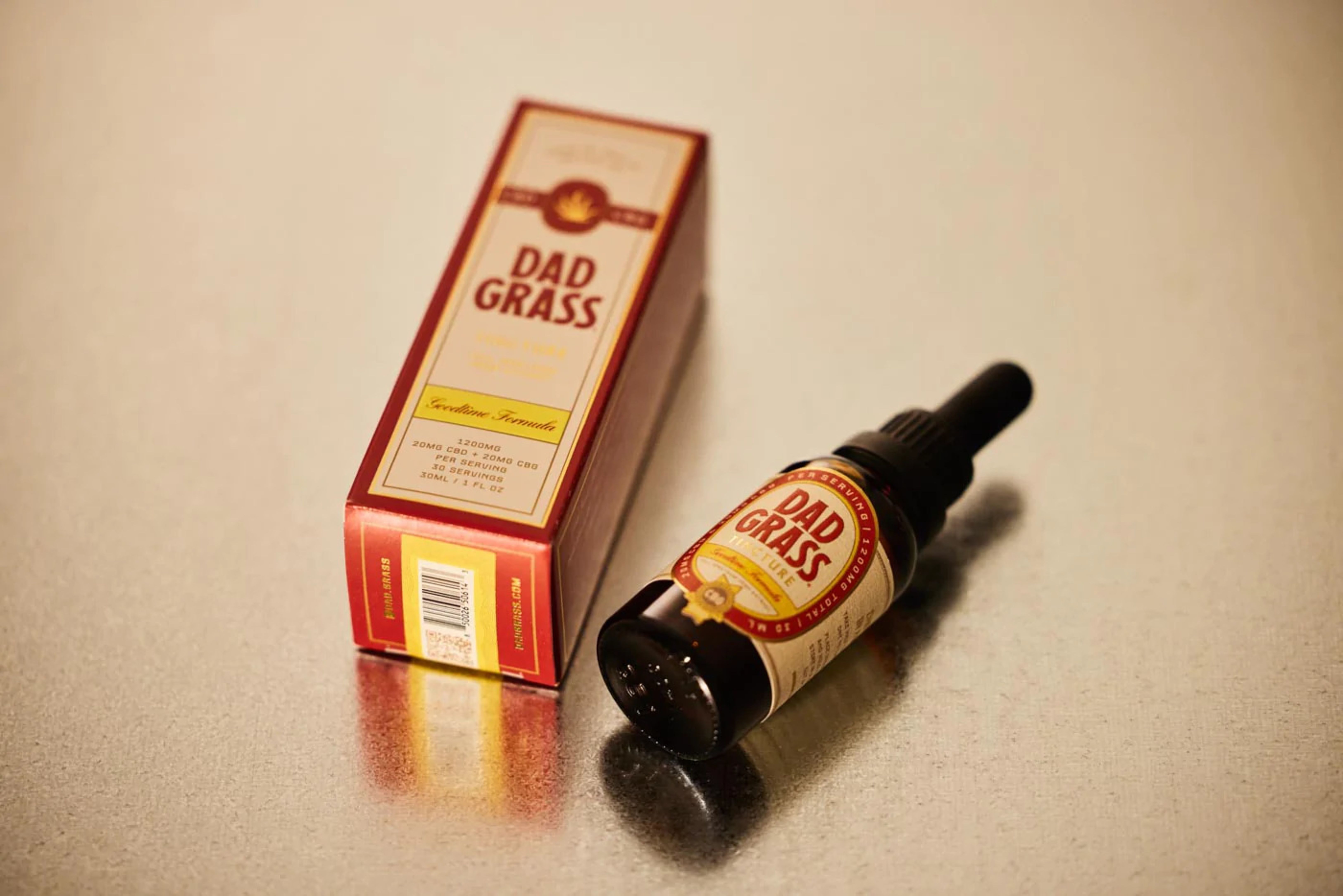
A manufacturer worth its retainer will tell you when your artwork encroaches on a required label zone, and will verify your layout against your target state’s current rules before you burn a production run on a symbol that is two millimeters too small.
A short pre-signing checklist
- Certification paperwork exists for the exact SKU, closure, and material you are buying, produced before payment.
- The supplier can name which standard each format carries and which accredited lab tested it.
- MOQs, reorder minimums, and end-to-end lead times (including freight) are confirmed in writing.
- You have handled samples through your own fill line, shipping, and repeated opening.
- The supplier flags state-rule changes to you rather than waiting to be asked.
- You know whether you are dealing with a manufacturer or a broker, and who answers when something fails.
- Sustainability claims come with specific, verifiable certifications, not adjectives.
Choosing a custom weed packaging manufacturer is the rare purchasing decision where the second-cheapest option is often the cheapest one that works. Start with the paperwork, test the samples like your license depends on them, and treat a supplier who educates you as the partner worth keeping. Get that sequence right and your packaging stops being a compliance risk and starts being the reason a customer picks your jar over the one next to it.
How this article was put together. The compliance thresholds come from the text of 16 CFR 1700.15, retrieved from Cornell’s e-CFR in September 2026. Market sizing figures come from Grand View Research’s published estimates for the U.S. cannabis packaging market. The Texas regulatory example and the supplier-evaluation framework are drawn from Cannabis Industry Journal’s April 2026 guide, and the sustainability cost ranges from Finished Goods’ June 2026 guide. Minimum order quantities and lead times vary by supplier and should be confirmed in writing before contracting.